
How Often Should You Detail Your Car? Full Guide
How often you should detail your car depends on driving frequency, storage, and climate, but most vehicles need a full detail every 4 to 6 months, or two to three times a year. Daily drivers benefit from a shorter 3-to-4-month interval, while garaged cars often stretch to every 6 months between full details.
Key Takeaways
- Most vehicles need a full detail every 4 to 6 months, roughly two to three times per year.
- Daily drivers usually need detailing every 3 to 4 months; garaged vehicles often last 6 months.
- Maintenance washes every 1 to 2 weeks help prevent brake dust and road salt from building up and bonding to the paint.
- Wax or polymer sealant can provide protection for several months, depending on the product, climate, wash frequency, and storage conditions.
- SB3 ceramic coating can extend protection intervals to between 1 and 8 years depending on the specific coating tier and product specifications.
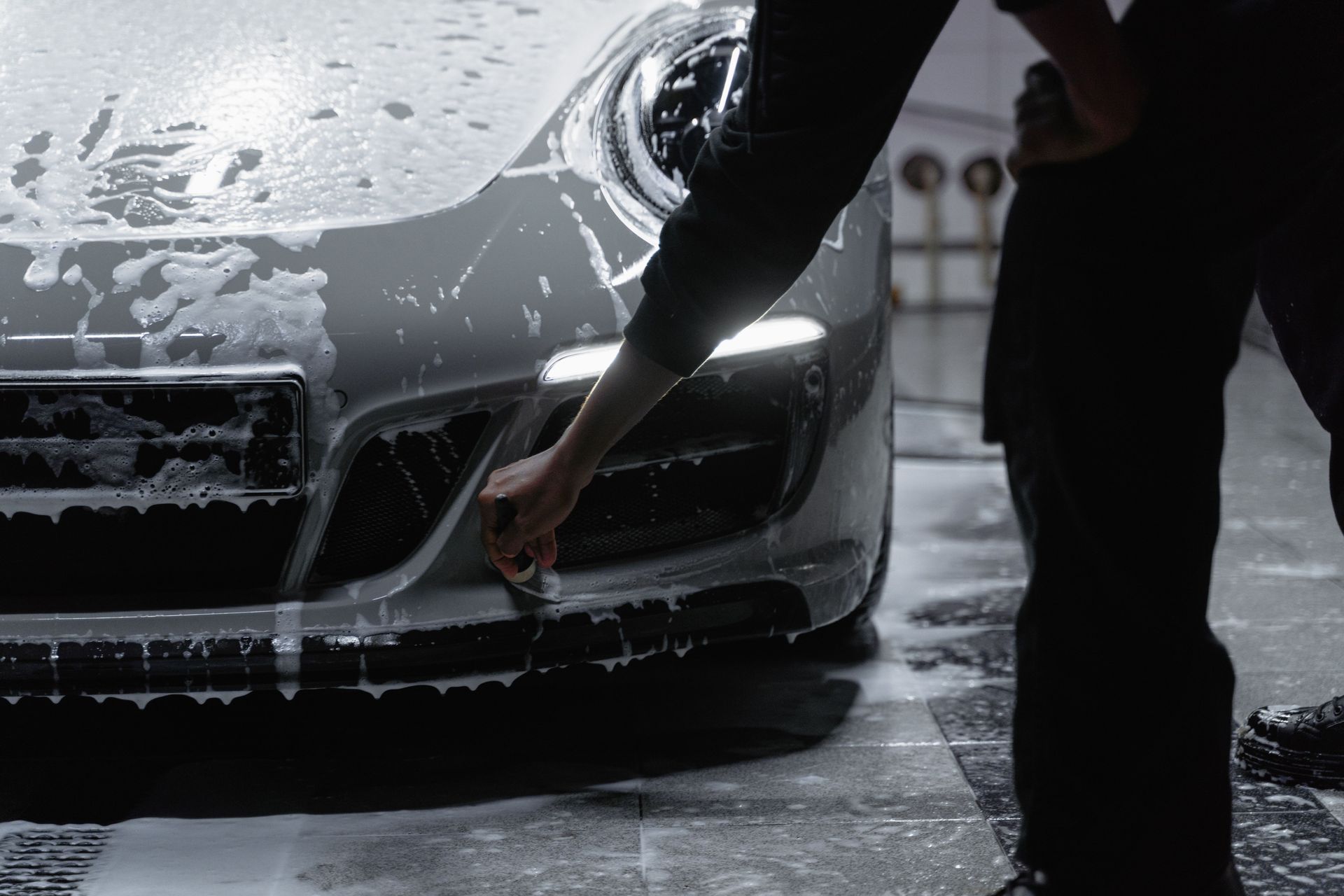
How Often Should You Detail Your Car?
A full detail every 4 to 6 months, or two to three times per year, suits most vehicles. A full detail covers both interior and exterior surfaces, and this twice-to-thrice-yearly rhythm keeps paint, trim, and cabin materials ahead of grime before it hardens. Daily drivers wear faster because commuting and outdoor parking accelerate contamination on paint and cabin surfaces. Garaged vehicles hold their finish longer since they avoid constant sun, rain, and road spray. A consistent schedule also surfaces small issues, such as early oxidation or a developing stain, before either becomes permanent.
What Is the Best Car Detailing Schedule?
The best schedule for most cars is a 4-to-6-month full-detail cycle, with exterior work every 3 to 6 months and interior work every 4 to 6 months. The right interval tracks mileage, storage, and daily exposure.
Several factors can change the ideal detailing interval:
- Driving frequency: Daily drivers accumulate road film and interior debris faster than vehicles driven occasionally.
- Storage: Garaged vehicles generally have less exposure to UV rays, rain, and airborne contaminants.
- Climate: Harsh weather, road salt, and freeze-thaw cycles can shorten the interval.
- Vehicle use: Kids, pets, and frequent passengers can increase the need for interior cleaning.
- Mileage: Higher-mileage vehicles generally accumulate exterior contamination faster.
Knowing what car detailing includes, from exterior decontamination to interior shampooing, makes the right interval easier to set. Exterior detailing removes the road film that builds faster on high-mileage cars, while interior detailing handles dust, spills, and odor. Enthusiasts, who tend to keep cars indoors, can stretch the cycle slightly, though maintenance washes still matter for low-mileage vehicles. The schedule below sets a practical baseline before adjusting for weather, kids, and pets.
Expert Insights:
“Minnesota drivers should anchor to the tighter end of every range. Freeze-thaw cycles and winter road salt in the Twin Cities push most vehicles toward a 4-month interval rather than 6.” - Enthusiasts Domain Detailing Team
How Often Should Daily Drivers, Garaged Cars, and Show Cars Be Detailed?
Daily drivers need detailing every 3 to 4 months, garaged vehicles roughly every 6 months, and show cars may benefit from a light refresh before events or about every month, depending on use and storage. These intervals reflect exposure, storage, and the appearance standard each owner is aiming for.
| Vehicle Type | Detailing Interval | Main Reason |
|---|---|---|
| Daily drivers | Every 3 to 4 months | Commuting, parking, and road grime |
| Garaged vehicles | Every 6 months | Lower exposure to sun and weather |
| Show cars | Light refresh as needed, often monthly | Camera-ready, event-ready finish |
A commuter with winter street parking sits at the tight end of the range, while a climate-controlled, garage-kept car sits at the relaxed end. Show-car upkeep centers on dust removal, quick protection touch-ups, and keeping the finish presentation-ready between events.
How Often Should Exterior and Interior Detailing Be Done?
Exterior detailing belongs on a 3-to-6-month cycle, and interior detailing on a 4-to-6-month cycle.
Exterior detailing may include:
- pH-neutral hand washing
- Wheel and brake dust cleaning
- Iron decontamination
- Clay bar treatment, as needed
- Machine polishing, when paint defects are visible
- Wax or polymer sealant application
Interior detailing may include:
- Deep vacuuming
- Carpet and upholstery shampooing
- Leather conditioning
- Headliner cleaning
- Interior trim cleaning
- Odor and stain removal
The exact combination of steps can vary based on the vehicle's paint condition, contamination level, and existing protection. Exterior protection shields paint, wheels, and trim from buildup that bonds to the surface if left too long, while interior care keeps the cabin easier to maintain between full sessions.
What Do Wax, Sealant, Clay Bar, and Paint Polishing Add to a Detail?
Wax and sealant add a sacrificial layer for several months depending on the product and conditions, clay bar treatment lifts embedded fallout, and paint polishing corrects surface defects. Together they protect the finish and refine how it reads under direct light.
| Step | Main Benefit | Typical Timing |
|---|---|---|
| Wax / polymer sealant | Shields the clear coat from UV and contaminants | Every 3 to 4 months |
| Clay bar treatment | Removes embedded rail dust, tar, and fallout | As needed during exterior detailing |
| Paint polishing | Reduces oxidation, swirl marks, and haze | When paint shows visible defects |
Wax and sealant slow oxidation and help water and dirt release during washes, with durability varying by product, climate, washing habits, and storage conditions. Clay bar treatment removes bonded particles that regular washing cannot lift. Paint polishing then clears oxidation and swirl marks, leaving a smoother surface for protection to bond to.
Ceramic coating
extends those intervals well beyond wax, holding for between 1 and 8 years depending on the specific coating tier and product specifications.
How Does Regular Detailing Protect Resale Value?
Regular detailing preserves resale value by preventing the permanent wear that lowers buyer confidence. Stains, oxidation, and damaged surfaces make a vehicle harder to sell and photograph, while a maintained interior and exterior present cleanly in listings and inspections.
Regular detailing can also help preserve a vehicle's presentation by:
- Reducing visible oxidation and paint wear
- Keeping upholstery, carpet, and trim cleaner
- Reducing stains and buildup that make a vehicle look heavily used
- Improving paint appearance for photos and inspections
- Maintaining a cleaner overall presentation when selling the vehicle
Exterior detailing protects paint from oxidation that can age a car years beyond its mileage, and interior detailing keeps upholstery, trim, and carpet from looking heavily used. Paint polishing lifts swirl marks and haze so the finish reads sharp in photos. A consistently cared-for vehicle can present significantly better than a neglected car with similar mileage, and service records can help demonstrate consistent vehicle care.
Get a Personalized Detailing Interval
Not sure where a specific vehicle falls on the schedule? Send
Enthusiasts Domain
2-3 photos of your current vehicle, inside and out, for a quick read on where the paint and cabin actually stand and what interval fits the way it's driven and stored. For a hands-on assessment, Enthusiasts Domain offers
professional car detailing in St. Paul, MN, matched to each vehicle's condition, exposure, and use.
Frequently Asked Questions
About Enthusiasts Domain
Enthusiasts Domain Detailing Team provides professional auto detailing, paint correction, and SB3 ceramic coating, serving the Twin Cities metro and St. Paul, MN since July 2021. Rated 5.0 stars across 77 Google reviews, with a 100% satisfaction guarantee on every service.
Last updated: August 2026